Polymer Clay Express
• Advent Calendar Downloadable PDF (See Below)
• Magnetic Sheets (Available at Office Supply Stores)
• Craft Glue or Strong Double-Sided Tape
• X-Acto Knife
• Bone Folder
• 1 4/8″ Craft Punch (Optional)
INSTRUCTIONS
1. Begin by downloading and printing the Advent Calendar PDF. With an x-acto knife, trim out along black lines. Once circles are trimmed, cut inwards making small slits along outer rim. Be sure to cut only to the edge of the color. This will aid in fitting the rounds inside the lids.
2. With the inside of the lid facing up, place number on top, face down and press into place. Secure by rubbing the pointy end along the inside edge of the tin top.
3. To make them magnetic, cut circular shape slightly smaller than the tin from magnetic sheeting. This can be done with either a craft punch or x-acto knife. Glue to bottom of tin, making sure not to glue magnetic side (the dark side).
4. Fill tins with small candies, toys, cute paper clips, whatever will fit and your family will enjoy!
5. Arrange magnets on fridge or any other magnetic surface. Place in rectangular numerical order, in the shape of a tree, or arrange them randomly for added hunting fun. The possibilities are endless so have fun!
 | |  | |  | |
Jejak PandaHallo Jumpa Lagi Kita Di Website Inijudi bandarq Boxing Day is a bank or public holiday that occurs on December 26, or the first or second weekday after Christmas Day, depending on national or regional laws. It is observed in the United Kingdom, Australia, Canada, New Zealand, and some other Commonwealth nations. In South Africa, Boxing Day was renamed Day of Goodwill in 1994. In Ireland it is recognized as St. Stephen's Day (Irish: Lá Fhéile Stiofáin) or the Day of the Wren (Irish: Lá an DreoilÃn). In the Netherlands, Lithuania, Austria, Germany, Scandinavia and Poland, December 26 is celebrated as the Second Christmas Day. Although the same legislation – the Bank Holidays Act 1871 – originally established the bank holidays throughout the UK, the day after Christmas was defined as Boxing Day in England, Scotland and Wales, and the feast day of St. Stephen in Ireland. A "substitute bank holiday in place of 26 December" is only possible in Northern Ireland, reflecting the legal difference in that St. Stephen's Day does not automatically shift to the Monday in the same way as Boxing Day. In Canada, Boxing Day takes place on December 26th and is a federal statutory holiday where all workers receive time off with pay. Etymology The exact etymology of the term "boxing" is unclear and there are several competing theories, none of which are definitive. The tradition has long included giving money and other gifts to those who were needy and in service positions. The European tradition has been dated to the Middle Ages, but the exact origin is unknown and there are some claims that it goes back to the late Roman/early Christian era; metal boxes placed outside churches were used to collect special offerings tied to the Feast of Saint Stephen. In the UK, it was a custom for tradesmen to collect "Christmas boxes" of money or presents on the first weekday after Christmas as thanks for good service throughout the year. This is mentioned in Samuel Pepys' diary entry for 19 December 1663; This custom is linked to an older English tradition: in exchange for ensuring that wealthy landowners' Christmases ran smoothly, their servants were allowed to take the 26th off to visit their families. The employers gave each servant a box containing gifts and bonuses (and sometimes leftover food). About The Date Boxing Day is a secular holiday that is traditionally celebrated on 26 December, the day after Christmas Day, which is also St. Stephen's Day, a religious holiday. However, when 26 December falls on a Sunday, Boxing Day in many places is moved to 27 December. In the U.K., where Boxing Day is a bank holiday, if Boxing Day falls on a Saturday, a substitute bank holiday is given on the following Monday, but if Boxing Day falls on a Sunday – which means that Christmas Day, another bank holiday, fell on a Saturday – then the Statutory Holiday for Christmas is moved to Monday 27 December and the Statutory Holiday for Boxing Day is moved to Tuesday 28 December.  In Scotland, Boxing Day has been specified as an additional bank holiday since 1974, by Royal Proclamation under the Banking and Financial Dealings Act 1971. In Ireland – when it was part of the United Kingdom of Great Britain and Ireland – the Bank Holidays Act 1871 established the feast day of St. Stephen as a non-movable public holiday on 26 December. Since the Irish War of Independence, the name 'Boxing Day' is used only by the authorities in Northern Ireland, which remains part of the UK. There, Boxing Day is a movable public holiday in line with the rest of the UK. In the Australian state of South Australia, 26 December is a public holiday known as Proclamation Day and Boxing Day is not normally a public holiday. In some Canadian provinces, Boxing Day is a statutory holiday that is always celebrated on 26 December. In Canadian provinces where Boxing Day is a statutory holiday, and it falls on a Saturday or Sunday, compensation days are given in the following week. Shopping In Britain, Canada, New Zealand and some states of Australia, Boxing Day is primarily known as a shopping holiday, much like the day after Thanksgiving in the United States. It is a time where shops have sales, often with dramatic price reductions. For many merchants, Boxing Day has become the day of the year with the greatest revenue. In the UK in 2009 it was estimated that up to 12 million shoppers appeared at the sales (a rise of almost 20% compared to 2008, although this was also affected by the fact that the VAT would revert to 17.5% from 1 January).

Many retailers open very early (typically 5 am or even earlier) and offer doorbuster deals and loss leaders to draw people to their stores. It is not uncommon for long queues to form early in the morning of 26 December, hours before the opening of shops holding the big sales, especially at big-box consumer electronics retailers. Many stores have a limited quantity of big draw or deeply discounted items. Because of the shoulder-to-shoulder crowds, many choose to stay home and avoid the hectic shopping experience. The local media often cover the event, mentioning how early the shoppers began queueing up, providing video of shoppers queueing and later leaving with their purchased items. The Boxing Day sales have the potential for customer stampedes, injuries and even fatalities. As a result, many retailers have implemented practices aimed at managing large numbers of shoppers. They may limit entrances, restrict the number of patrons in a store at a time, provide tickets to people at the head of the queue to guarantee them a hot ticket item or canvass queued-up shoppers to inform them of inventory limitations.
In recent years, retailers have expanded deals to "Boxing Week", and some stores even have "half way to boxing day sales" on June 26th While Boxing Day is 26 December, many retailers who hold Boxing Day Sales will run the sales for several days before or after 26 December, often up to New Year's Eve. Notably, in the recession of late 2008, a record number of retailers were holding early promotions due to a weak economy. Canada's Boxing Day has often been compared with the American Super Saturday, the Saturday before Christmas.

In some areas of Canada, particularly in Atlantic Canada and parts of Northern Ontario (including Sault Ste. Marie), most retailers are prohibited from opening on Boxing Day, either by provincial law or municipal bylaw. In these areas, sales otherwise scheduled for 26 December are moved to the 27th.
In Ireland, since 1902, most stores remain closed on St. Stephen's Day, as with Christmas Day. In 2009, some stores decided to open on this day, breaking a 107-year-old tradition. Some stores have also started their January sales on this day. Cyber Boxing Day The online version of Boxing Day has been referred to as "Cyber Boxing Day". In the UK in 2008, Boxing Day was the busiest online shopping day of the year. In 2009, many retailers with both online and High Street stores launched their online sales on Christmas Eve and their High Street sales on Boxing Day.
Sport
In England, Scotland and Northern Ireland it is traditional for the Premier League, Scottish Premier League and Irish Premier League respectively, as well as the lower divisions and Rugby leagues, to hold a full programme of football and Rugby League matches on Boxing Day. Traditionally, matches on Boxing Day are played against local rivals. This was originally to avoid teams and their fans having to travel a long distance to an away game on the day after Christmas Day. It also makes the day an important one in the sporting calendar. In Australia and South Africa, on the boxing day famous and awaited test matches are played. Especially in Australia nearly 100,000 people come every year to the Melbourne Cricket Ground to witness the Boxing Day test match.
In horse racing, there is the King George VI Chase at Kempton Park Racecourse in Surrey. It is the second most prestigious chase in England, after the Cheltenham Gold Cup.
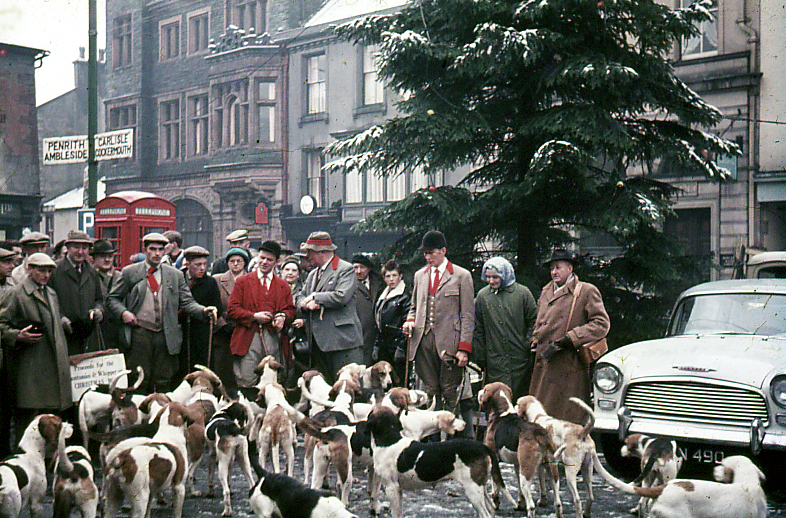
Boxing Day is a popular day in the U.K. and U.S. for mounted fox hunters. Despite fox hunting being banned by the Hunting Act in 2004, Boxing Day remains the biggest hunt of the year for most hunts in the UK by use of scent drag trails instead of live quarry.
Australia holds the first day of the Boxing Day Test in Melbourne at the Melbourne Cricket Ground and the start to the Sydney to Hobart Yacht Race.
The IIHF World U20 Championship (ice hockey) typically begins on 26 December.
The NHL tends to have close to a full slate of games (11 were played in 2010), following the league-wide days off given for Christmas Eve and Christmas Day.
The Spengler Cup (ice hockey) also begins on 26 December in Davos, Switzerland, and includes HC Davos, Team Canada, and other top European Hockey teams.
In some African Commonwealth nations, particularly Ghana, Uganda, Malawi, Zambia and Tanzania, prize fighting contests are held on Boxing Day. This practice has also been followed for decades in Guyana and Italy.
Jejak PandaHallo Ketemu Lagi Di Situs Kesayangan Andadaftar bandarq The Original Christmas Tree Ship The story of the beginning of the Christmas Tree Ship is the story of the Schuenemann family, and most particularly the story of Capt Herman Schuenemann and his last ship, the Rouse Simmons. In approximately 1885 August and his brother Herman Schuenemann moved to Chicago to seek out their fortune. Chicago’s Harbor was one of the busiest in the world at this time with over 20,000 vessels entering and leaving annually. As competition was fierce, the brothers became excellent businessmen as well as sailors. Although they made a relatively good living, two-thirds of their annual income was generated between Thanksgiving and Christmas with the sale of trees. August had become a truly competitive trader and by 1895 had a well-established reputation as a Christmas tree merchant. In early November of 1898, August was in Sturgeon Bay looking for trees that he would bring to Chicago on a ship named the S. Thal. He purchased 3,500 trees and on November 9th departed with 3 crewmembers for Chicago’s Harbor. A few days later the S. Thal was caught in a horrific storm off the coast of Glencoe, IL and perished. There were no survivors. Herman did not sail with his brother that year, probably due to the birth of his twin daughters in October. Continuing with the efforts of his and Augusts, Herman now had a business without a partner. Herman sailed further and further north with each passing year. This allowed him to purchase better quality trees at a lower cost but this also made Herman and his crew incur poor and unpredictable weather the further north they sailed. Over the next few years Herman had lost one ship and almost lost another. This triggered him to purchase larger ships (the largest measuring 130 feet long and 26 feet wide.) With the larger and more stable ships, Herman went as far north as the Soo Canal to purchase his trees from the Indians. Eventually, he would hire his own crew to cut and prepare the trees for the journey back to Chicago. In 1910 Schuenemann had established the †Northern Michigan Evergreen Nursery†whose address was given as the “SW corner Clark Street Bridge.†This allowed him to lower his expenses by selling his cargo directly from the deck of his ship. No longer would Capt. Schuenemann pay laborers to carry trees to store owners and local grocers. He was trying to eliminate as much of the middleman as possible. While Herman sold trees and greens on deck, his daughters worked below by the warmth of the cabin stove making wreaths out of cut greens. In order to even further lower his expenses, sometime between 1910 and 1912 Herman purchased 240 acres in upper Michigan. In salaries for tree cutters, crew, provisions, towing fees and miscellaneous expenses, a single trip would have cost him approximately $3,000. Any failure to return with trees would leave Herman flat broke. In order for Herman to cover all of these expenses as well as make the bulk of his annual income, he now had to transport as many trees as possible with each journey.  |
| By 1911, Schuenemann owned a large vessel named the Rouse Simmons. A ship of her magnitude could carry more than 5,000 trees that were lashed down tightly. The weight of these trees would not become a factor unless they became wet and froze. If this was to happen the weight could now become detrimental to the journey’s success. Schuenemann had the Rouse Simmons recaulked during his passage to Chicago in 1911, but failed to recaulk her prior to leaving Chicago for his 1912 adventure. The neglect to recaulk the Rouse Simmons in 1912 was probably due to financial strains caused by Schuenemann being sued for failure to repay an old debt. The decision not to recaulk the Rouse Simmons would be a fatal one. She was last seen on November 23, 1912, between Kewaunee and Two Rivers Wisconsin, with distress signals flying. Capt. Schuenemann and his crew of 16 went down just 30 miles south of his boyhood home of Ahnapee, Wisconsin. Throughout the years that the Schuenemann’s made their living from the Maritime Christmas Tree business, it rose, peaked and by 1912 was fading. What began as an informal tukar barang system evolved into big business controlled by the high-volume wholesalers. As the railroads and improved highways were now the most efficient way of moving Christmas trees throughout the Midwest, old wooden bottomed vessels became obsolete. Chicagoans remembered †Christmas Tree†Schuenemann for at least the next generation. In December of 1934, in the height of the depression, three middle-aged women opened a store on the Near North Side of Chicago. The sign, which brought back many good times and feelings, read CAPTAIN AND MRS. SCHUENEMANN’S DAUGHTERS. Passerby’s entered the store, shared stories of their childhood on the docks and bought the tree they were to display in their parlor. That was the only year that the daughters had a shop. That was probably due to the depression, but it was said that so few people had given so much joy to so many people, as did the Schuenemann family, just for doing their job.  With a Christmas tree hanging from its mast and a red-bowed wreath fastened beneath its bridge, the icebreaker Mackinaw powers through the frigid waters of Lake Michigan bound for Chicago's Navy Pier. Lashed to the decks of the U.S. Coast Guard ship are 1,500 Christmas trees that will be distributed to disadvantaged families in the Windy City. Each December, the 240-foot Mackinaw and its 60-person crew carries on the time-honored tradition that rouses holiday spirit and creates lasting memories for tree growers, volunteers and recipients. "This will be our first Christmas tree," says Nana Afari, 34, after receiving a free tree last year with her husband, Eric, 36, and their son, Kweku, 3. "We're very excited about it," adds Afari, who immigrated to the United States from Ghana eight years ago. "We're going to put a star on the tree," Kweku chimes in. The Christmas Tree Ship, as the evergreen-laden Mackinaw is dubbed, continues the legacy of the Rouse Simmons, a three-masted schooner that transported Christmas trees to Chicago a century ago from Michigan's Upper Peninsula. The ship's captain, Herman Schuenemann, sold trees from his vessel and gave some to Chicagoans who couldn't afford their 50-cent price. "The crew and I feel fortunate to share in such a wonderful endeavor," says Mackinaw Cmdr. Scott Smith, 42, standing aboard his ship. "We're proud to stand in for the Rouse Simmons." Reclaiming a Tradition The legacy of the Rouse Simmons was resurrected a decade ago as Coast Guard administrators and members of Chicago's marine community were searching for ways to help Chicago's less fortunate during the Christmas season. They formed the Chicago Christmas Ship Committee and began raising money to purchase trees for families who couldn't afford them. "We knew a large number of kids couldn't afford Christmas trees; we didn't want that to happen in Chicago," says Truitt, the committee's aktivitas director. Since 2000, the all-volunteer organization has given away more than 10,500 trees to poor individuals and families. "It gives me great satisfaction to know these trees are going to families who wouldn't otherwise get one," says Lloyd Karzen, 71, a yachting enthusiast who has served on the Chicago Christmas Ship Committee since its inception. The committee organizes thousands of volunteers each year and raises thousands of dollars to purchase Christmas trees. Growers in Michigan and Wisconsin provide 6-foot fir trees at reduced prices and deliver them to Cheboygan, Mich. (pop. 5,295), where the Mackinaw is stationed  "Contributing to someone else's happiness is what the season's all about," says Chris Maciborski, 36, owner of Dutchman Tree Farms in Manton, Mich. Voyage and volunteers Scouts, high school students and crew members load the Mackinaw prior to Thanksgiving before the Coast Guard cutter departs on its 600-mile seasonal journey to replace buoys on Lake Michigan with winter markers. After the Mackinaw docks in Chicago on the first Friday in December, yachting club volunteers string 8,000 lights on its railings, some years chipping off ice before they can decorate the ship. Hundreds of school children tour the ship, listen to ecology lessons from Coast Guard Auxiliary, and hear Ruth Gibson retell her mother's Christmastime story. The following day, the trees are unloaded. Laughing, joking and singing holiday songs, 250 Scouts from across the Midwest unload trees from the Mackinaw's deck. Trucks transport the evergreen cargo to 16 charities and churches throughout Chicago for distribution, and the Mackinaw departs to resume its winter mission. "This is a fantastic display of human togetherness," says Boy Scout Nick Bernstein, 17, a third-year volunteer. "It's truly heartwarming."
Jejak PandaSelamat Membaca Di Blog Kesayangan Andabandarq The origins of Mardi Gras can be traced back to Medieval Europe, though we have no written record of how that really transformed into the current Mardi Gras of today. But the origins of the Mardi Gras we celebrate today....with Kings, Mardi Gras colors, and brass bands....are traced to New Orleans. Although we can trace its history to the Romans, a French-Canadian expolorer, Jean Baptiste Le Moyne Sieur de Bienville, landed on a plot of ground 60 miles directly south of New Orleans in 1699 and called it " Pointe due Mardi Gras". He also established "Fort Louis de la Louisiane" (which is now Mobile) in 1702. In 1703, the tiny settlement of Fort Louis de la Mobile celebrated the very first Mardi Gras.
In 1704, Mobile established a secret society (Masque de la Mobile)....similar to those who form our current Mardi Gras Krewes. It lasted until 1709. In 1710, the " Boef Graf Society" was formed and paraded from 1711 through 1861. The procession was held with a huge bull's head pushed along on wheels by 16 men. This occurred on Fat Tuesday. New Orleans was established in 1718 by Jean-Baptise Le Moyne. By the 1730's, Mardi Gras was celebrated openly in New Orleans...but not in parade form. In the early 1740's, Louisiana's Governor The Marquis de Vaudreuil, established elegant society balls...the model for the New Orleans Mardi Gras balls of today.
The earliest reference to Mardi Gras "Carnival" appears in a 1781 report to the Spanish colonial governing body. That year, the Perseverance Benevolent & Mutual Aid Associaiton is the first of hundreds of clubs and carnival organizations formed in New Orleans. By the late 1830's, New Orleans held street processions of maskers with carriages and horseback riders to celebrate Mardi Gras. newspapers began to announce Mardi Gras events in advance. In 1871, Mardi Gras's second "Krewe" is formed, the Twelfth Night Reveler's, with the first account of Mardi Gras "throws".
1872, was the year that a group of businessmen invented a King of Carnival-Rex-to parade in the first daytime parade. They introduced the Mardi Gras colors of purple, green and gold, the Mardi Gras song, and the Mardi Gras flag. In 1873, the first floats were constructed entirely in New Orleans instead of France. In 1875, Governor Warmoth of Louisiana signs the "Mardi Gras Act" making it a legal holiday in Louisiana, which it still is. Most Mardi Gras Krewes today developed from private social clubs that have restrictive membership policies. Since all of these parade organizations are completely funded by its members, we call it the "Greatest Free Show on Earth"!
History Behind the King Cake As part of Christian faith, the coming of the wise men bearing gifts to the Christ Child is celebrated twelve days after Christmas. We refer to this as the Feast of Epiphany or Little Christmas on the Twelfth Night. This is a time of celebration, exchanging gifts and feasting. Today, the tradition continues as people all over the world gather for festive Twelfth Night celebrations. A popular custom was and still is the baking of a special cake in gaji of the three kinds called "A King's Cake". Inside every cake is a tiny baby (generally plastic now, but sometimes this baby might be made of porcelain or even gold). The tradition of having King Cake Parties has evolved through time, and the person who receives the slice of cake with the baby is asked to continue the festivities by hosting the next King Cake party.
Originally, King Cakes were a simple ring of dough with a small amount of decoration. Today's King Cakes are much more festive. After the rich Danish dough is braided and baked, the "baby" is inserted. The top of the ring or oval cake is then covered with delicious sugar toppings in the traditional Mardi Gras colors of purple, green and gold. In more recent years, some bakeries have been creative with stuffing and topping their cakes with different flavors of cream cheese and fruit fillings.
January 6th, the Twelfth Night after Christmas, is also the day Mardi Gras season begins. Mardi Gras Day is always 47 days prior to Easter Sunday (Fat Tuesday is always the day before Ash Wednesday). So, in Louisiana, especially, Mardi Gras season and King Cakes go hand in hand with literally hundreds of thousands of King Cakes consumed at parties and office lunch rooms every year. Ordering King Cakes over the Internet has now become an annual tradition by consumers all around the world...and many of the bakers offer them year around. After all, you can't have a Mardi Gras party without a King Cake.
Jejak PandaJumpa Lagi Kita Diblog Kesayangan Andaceme 99 online I know there are thousands, if not millions of chocolate lovers out there. I happen to be one of those people and have tried several different chocolate treats in my lifetime. So what do I consider to be the top chocolate treats? I find that there are several different chocolate treat categories and there are treats in each category that are better than the rest. This article will stick to foods you can buy in almost any grocery store. These chocolate treats are low in price but high in taste. Candy bars
We've all tried several varieties of this chocolate treat, but which ones are the best? Throughout my life, my tastes have changed and I've had several different favorites. My favorites lean now to either the milky way kafetaria , with it's chocolate and caramel, or a nice big snickers bar, with the chocolate and caramel and a little dose of peanuts to go with it. Ice Cream Let's face it, just plain old chocolate ice cream is wonderful. It's right up there with vanilla. Vanilla you say? But I thought this was about things chocolate. You're right, but vanilla is like a canvas of a painting you can add anything to it to make it whatever flavor you're craving at the time. Anything from hot fudge to chocolate chips, a little or a lot, it's up to you to decide. When we talk ice cream it's all about the quality of it and the QUANTITY of it. We can go to the local market and get anything from rocky road to brownie batter ( chocolate ice cream with chunks of brownies. The ice cream world is your oyster, shuck it and eat it all up!!! Cookies When most of us think of a cookie, it's probably a nice, chewy, gooy, dunk in your milk, chocolate chip cookies. My family can't even wait for them to go into the oven, they'd rather eat cookie doe instead. You can make up a batch of them and after they come out of the oven, take some chocolate chips, put them in a microwave safe bowl, and when the chocolate has melted, dip half of the chocolate cookies in it for a little bit of a chocolate high! Snack Cakes Nothing says comfort food more than a box of individually wrapped ding dongs or ho ho's! A couple of them with a glass of ice cold milk hits the spot. I don't think there's a snack cake made that isn't good. Candies When you think of loose chocolate candies, does anything come to mind? Anyone?? Anyone??....You in the back row, with your hand up, what is it?....... I box of See's candy sir! Nuts and chews if you please!!.....Good answer! Good answer! Anything from truffles to chocolate covered almonds with caramel and everything in between. Like Forrest Gump always says, "Life is like a box a chocolates! You never know what you're gonna get!" So be sure that it's a good quality chocolate, not a box of some unknown companies chocolates that you got at the Dollar Store (that sure doesn't taste like the chocolate I'm used to!). While there are several other chocolate treat categories, these are some of the best. I hope this article made you think of all of the different flavors and smells coming this holiday season and make sure you eat it in moderation. So next time when you're having a craving for more of that ding dong or those nuts and chews, there will be some more for you to eat, that little stash you keep for yourself, your family doesn't know about.
Jejak PandaHallo Jumpa Lagi Kita Di Blog Inijudi ceme terpercaya The Viareggio Carnival was established in 1873 when some of the local "signori" decided to organize a Sunday a little different from the rest, by inventing a procession of decorated floats which travelled up and down the main street of the city. On the occasion , a masked protest was also organized by a number of citizens, as they were forced to pay too many taxes and as a result the chief tax collector was certainly made fun of!! The parade was liked alot, not only by the patrons but also by the citizens and the idea of making floats that interpreted humor and dissatisfaction of the people and the events that came about in that year. Carnival of Viareggio celebrating 139 years of life and activity under the sign of a vivid tradition such as the long – established European tradition of Carnival festivals, is no doubt one of the best known events in Italy. Carnival of Viareggio since it was born it has been acquiring a strong touristic value and attracts every year more than one million spectators gathering to attend the magic of the great parade of big floats in papier – maché. In 2018, the usual five carnival masked parades are planned for Jan 27, 2018 – Feb 17, 2018 on the extraordinary Liberty style staging along the seaside avenues of Viareggio. Every evening, there are carnival celebrations in all of the city's different quarters. Real travelling theatres - the allegorical papier-maché floats are the product of the unequalled creativity, of the extraordinary sculpture and painting skill of Viareggio ‘magicians’, and are the highest example of this popular art whose language has spread all over the world. The parades take place in a ring-like circuit 2 km. long, on the seaside avenues of Viareggio, best known as La Passeggiata. Here the floats move among the spectators, who can attend the show with no barriers, becoming in turn the protagonists of the parade. During the Carnival period, Viareggio and his Passeggiata change into a true open air Museum where people coming from all over the world meet to enjoy together. The parades also include folkloristic bands and performers with the most original masks, offering excitement, culture and tradition in a wide programme of entertainment and fun for children and adults 
 Viareggio The popular seaside town of Viareggio is situated on the Tuscany coast. Viareggio and the resorts "Torre del Lago Puccini", "Lido di Camaiore", "Marina di Pietrasanta" makeup about 20 kilometers of the Versilian Riviera (or Riviera della Versilia). Viareggio has most of the usual attractions of a typical Italian seaside resort. The town's symbol, heart of its history, is the “Torre Matildeâ€, built by the Senate of Lucca in 1550. In 1601 Viareggio, that was already a township, was declared a free port, and in 1617 it became the chieftown in the Vicaria del Litorale (the coastal viacariate). The birth of the first bathing establishment dates back to 1823. We owe the building of Viale dei Tigli to Maria Borbone, through which she could reach the centre, leaving from her villa situated in the East pinewood. In fact, the touristic activity began in Viareggio right in this period. Many men of culture stopped for a time in this area: the poet Percy B.Shelley, Lord Byron, Manzoni, Puccini and D'Annunzio. The city is 23.76 miles to Pisa, 17.67 miles to Massa, 29.87 miles to Livorno, and 59.5 miles to Firenze. The 3 Km modern promenade, where the parade takes place, is one of the focal point of the city, characterized by shops, cafes, refreshment points and Liberty style buildings. Viareggio is now a tourist seaside resort with beaches and hotels boast ancient tradition.
Since then Viareggio has become the home of the Italian Carnival, with its masked parades characterized by allegorical floats in papermache'. These floats are true works of art to which the local float makers dedicate an entire year of workmanship to. There is not one politician, entertainer, or intellectual that has not been a sasaran (protagonist) of one of these floats, which almost comes to life during the parade by the moving arms, opening and closing mouths and rolling eyes. On every float, young people and children find a place from which to throw confetti and shooting stars to the crowd. During the entire period, masked balls and parties in the various "rioni" (quarters, districts) are organized as well as numerous sport and cultural events.
The official Viareggio Carnival mask is the "Burlamacco", a clown which wears clothes. Checkered overalls, taken form the Harlequin's costume, a white ponpon stolen from Pierrot's big puffy blouse, a white gorget -"Captain Scary" style, a red headband and a black mantle. The name Burlamacco derives from Buffaimacco a Florentine painter and a character in the "Decamerone".However, it is also said to be linked to the Lucchese surname Burlamacchi.
|